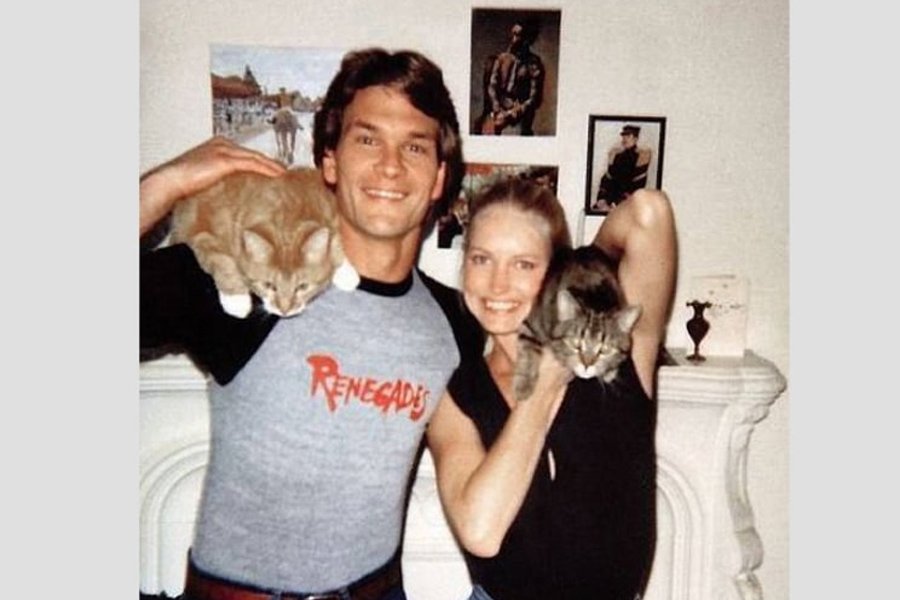
Vickie Lynn Swayze: The Quiet First Movement

The eldest in the wings
I have always been drawn to the people who live just out of the spotlight. Vickie Lynn Swayze is one of those presences. As the eldest child in a household that breathed dance, she occupied a role both visible and invisible. Visible because she came first, because she carried the original cadence that younger siblings followed. Invisible because history loves marquee names and not the contours of everyday labor. I think of Vickie as a first movement in a concerto. It does not shout. It establishes tone.
Birth and beginnings in motion
Born on June 8, 1949 in Houston, Texas, Vickie entered a family where posture and rhythm were taught like grammar. Her mother taught steps like sentences. Their home was a studio in miniature. I imagine the floors marked with the slow erosion of practice, the constant echo of music. That environment trained bodies and wills alike. It shaped Patrick Swayze and Don Swayze and it shaped Vickie. But while Patrick later stepped under global illumination, Vickie chose patterns that remained private. She trained. She learned. She built a life that most public records skim over. That absence intrigues me. It does not mean absence of value. It means a different kind of life was lived.
The move and the last chapter
In the fall of life’s movements, Vickie left Houston and eventually lived in California. Her death occurred on December 2, 1994 in Van Nuys, California. I picture a final exit from a crowded stage into a quieter hallway. Funeral notices in early December that year marked the end of public recordings of her days. Her name was placed in memorial registries and at a resting place in Simi Valley. Those records do not contain the private choreography of grief, the small decisions and conversations that shaped the end. They offer instead a location, a date, a handful of facts. They are like program notes without the anecdotes.
Family as company and consequence
Being the eldest in a family that became a de facto company of dancers and actors has costs and peculiarities. Elders often carry disciplinary authority. They become depositories of family memory. I suspect Vickie held the first versions of the family stories. She watched her younger brothers step into public life. She watched their costumes get brighter. Fame changes the orbit of family finances and privacy. I do not see public records of inheritance disputes or business filings tied to Vickie. I see instead a quieter arithmetic: private life, modest public trace, no authoritative net worth in public filings.
Dance as language and the choice of privacy
Dance was a family language. It taught communication without speech. For Vickie that language may have been both shelter and prison. She learned how to convey a thousand feelings without naming them. In families like the Swayzes, skill can become identity, and identity can pressure a person into roles they did not ask for. Choosing privacy becomes a refusal to perform on demand. I respect that refusal. I also wonder how that refusal intersected with other currents in her life. The public mentions of mental health struggles around her passing suggest long private battles. Those are tender subjects. They deserve care in how they are spoken about. Still, their existence invites reflection about the cost of being inside a household where performance is the metric of worth.
The way small records become legacy
When there is little public record, memory is carried by other vessels. Grave markers. Obituary clippings. Family trees. Fan memorial pages. I have noticed that Vickie’s memory survives through the places where people pause. A photograph in a collector’s album. A caption on an online memorial. A quiet note in a newspaper archive. These items aggregate into a mosaic. They do not create a biography in the conventional sense. They create instead a sense of presence. This digital collage can be more intimate than a headline. It captures the way a life intersects with others.
Stigma, silence, and the 1990s context
The 1990s did not treat mental health with the nuance we aspire to today. Silence was often the ritual surrounding struggle. To speak of it publicly risked shame. I find that detail important when considering Vickie’s life and death. The cultural container around mental health then shaped how families responded. It affected what was recorded and what was hidden. That social pressure matters because it determines the shape of the archive we now inherit. If someone asked me whether that context changed the way we remember Vickie, my answer would be yes. It softened the edges of available facts and hardened the need for empathy.
The afterlife of a private life in public fandom
Patrick became a cultural figure and his fame created new angles on his family. Vickie’s name often appears in remembrances of him. Fans and journalists circle the family tree looking for meaning. That attention can be benevolent. It can also be a kind of reclamation of someone who preferred privacy. I do not think Vickie asked for that. I do think the pull of familial narrative is strong. Her presence in those narratives becomes a way for others to narrate completeness. I watch that process as an outsider who wants to notice how people fit private stories into public catalogs.
The archives that remain and what they do not tell
Public records give us dates, places, names. They rarely tell us the daily, granular life. For Vickie the archive includes birth and death dates. It includes a burial location and funeral notices. It includes mentions in family summaries. What it lacks are diaries, letters, playlists, the names of teachers beyond family, a list of choreography she may have loved. That lack feels significant to me. It is a reminder that history prefers certain kinds of evidence. I try to hold space for the missing things as much as the present ones.
FAQ
Who was Vickie Lynn Swayze?
Vickie Lynn Swayze was the eldest child of Patsy and Jesse Wayne Swayze. She was born on June 8, 1949 in Houston, Texas. Trained in dance within the family studio, she lived a largely private life in contrast to the public careers of her younger brothers. Her life is documented in memorials and family listings rather than in extensive public professional records.
When and where did Vickie Lynn Swayze die?
Vickie Lynn Swayze died on December 2, 1994 in Van Nuys, California. Funeral notices were recorded in early December of that year and she was memorialized in Simi Valley. These public records mark the end of available civil details.
Was Vickie involved in public performance or film?
Public records do not show a filmography or long public performance résumé for Vickie. She was trained in dance and grew up in a household devoted to teaching and choreography, but she did not leave the same public trail as Patrick Swayze.
What is known about Vickie Lynn Swayze’s net worth?
There are no authoritative public estimates or filings that provide a reliable figure for Vickie Lynn Swayze’s net worth. Public financial traces that might exist for celebrities are not present in her case.
Are there records about the cause of her death?
Some secondary and memorial accounts reference struggles with mental health around the time of her death. Public obituary notices recorded her passing but detailed official cause of death records are not part of the typical public archives that circulate in fan and memorial materials.
About Me

Chesung Subba
Author/Writer
Hello, I'm Chesung Subba, a passionate writer who loves sharing ideas, stories, and experiences to inspire, inform, and connect with readers through meaningful content.
Follow Me
Connect with me and be part of my social media community.