The Quiet Court: Growing Up as Jannero Pargo Jr. in a Family of Halftimes and Headlines

A private life played in public
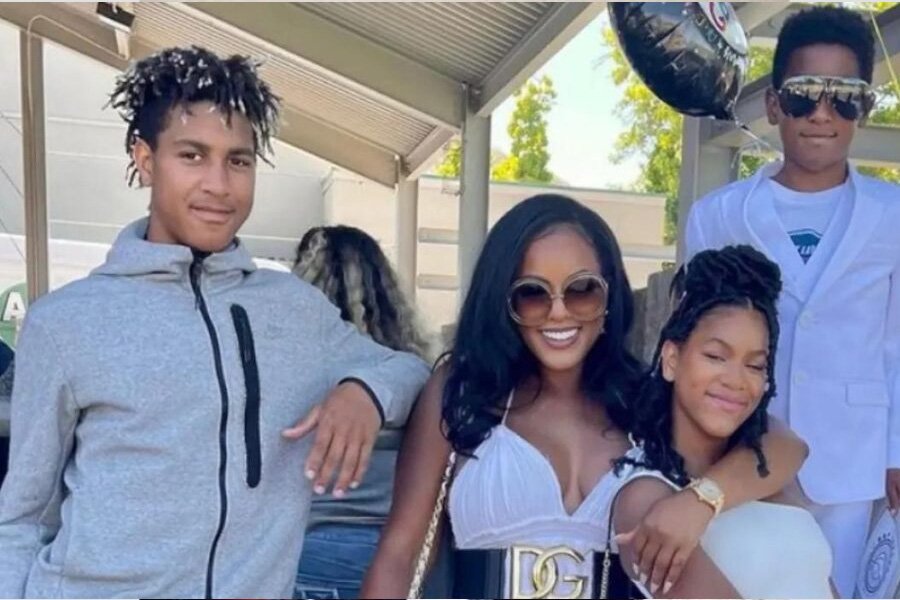
I have watched families like this from the stands and from the sidelines, and what always strikes me is the split screen: one half is routine, the other is spectacle. For Jannero Pargo Jr. that split is not hypothetical. He moves between locker-room language and Sunday school, between rehabbing a jump shot and being photographed at family celebrations. His name signals lineage and expectation, but it also marks a kid who is still learning how to hold both private moments and public frames at once.
Watching him grow up feels like watching a film strip where certain frames get highlighted in neon: games, televised arguments, social media posts. But most frames remain unlit. Those quieter images are where character forms – small rituals, choices made without cameras, the way a parent corrects a shoelace before practice, the text sent at midnight asking if homework is done.
The athletic echo and what it asks of him
There is an echo that follows children of athletes. It is not only the sound of a ball swishing through a net; it is the memory of every uniform, every plane ride, every highlight reel shown at family gatherings. For Jannero Pargo Jr. the echo carries the voices of his father and uncle, players who have translated stamina and split-second decision making into livelihoods. That echo offers a map but not a mandate.
I think about the practical things the echo asks of him. Early mornings for drills. Pressure to perform in front of family friends who measure progress in game stats. The invisible ledger that tallies potential – talent on one side, expectation on the other. It is easy to mistake exposure for destiny. I do not. Talent is raw material. Desire is the craftsman.
The public lens and the child’s experience
Social media has a way of telescoping moments. A birthday becomes a staged vignette. A scraped knee becomes an item of commentary. Parents may post with love and with strategy. For Jannero Pargo Jr. the family accounts that chronicle holidays and milestones are also the places where identity is curated. That curation is a double-edged sword. It can be a protective archive, a memory bank parents intend for their children to access later. It can also trap a narrative into public form before the child can choose his own version.
From where I stand, the ethical question is not whether to post. It is how to preserve agency for the child. Do you withhold certain images until the child consents? Do you separate moments meant to inform from those meant to entertain? These are decisions that will shape how Jannero understands himself when he grows older.
Financial contours and the aftershocks of adult choices
Families that orbit professional sports often face complex financial narratives. Contracts, endorsements, coaching salaries, and business ventures create an economy around a household. For a teenager like Jannero Pargo Jr. those currents are background noise most days. Yet they shape the environment: the schools available, the travel teams considered, the access to specialized coaches.
I think of money as a set of choices translated into opportunity. It affords training, yes, but it can also complicate relationships, introduce public speculation, and create expectations that equate worth with earning potential. The financial aftermath of relationships and legal decisions has a long tail. It touches custody arrangements, schooling options, and the emotional bandwidth parents can offer. A child learns to read these things even when adults do not intend to teach them.
Education, mentorship, and the shape of a future
Growing up in a household with basketball in the DNA does not lock a child into a single path. I see education and mentorship as the scaffolding that lets a young person choose freely. For Jannero Pargo Jr. structured schooling, mentors beyond the family, and programs that encourage curiosity outside athletics are vital. A music class, a coding workshop, a summer job at a community center – these are not detours. They are experiments in identity.
Mentorship is not only about technique. A coach can teach footwork. A mentor teaches how to endure loss, how to manage public attention, how to build relationships outside a team. The best mentors model integrity, not spectacle. They show that resilience can be quieter than a highlight reel.
Siblings, family stories, and the archive of memory
Having younger twins as siblings changes the household dynamics in ways that are subtle and durable. Siblings are mirrors. They amplify humor, expose cruelty, and provide constant practice for negotiation. For Jannero Pargo Jr. being the eldest means he is watched by his siblings in real time. It also means he is likely to be asked to lead and to protect. Those roles can be grounding. They can also be heavy.
Family stories – the recurring anecdotes told around dinners and on social media – create a shared folklore. They teach children what to value, which events become milestones, and how to interpret setbacks. I often argue that curating family memory should be done with intention. Choose stories that teach empathy, not only triumph.
Mental landscape: identity beyond the jersey
Public life can make a young person feel like a set of roles: athlete, child of a celebrity, social media subject. Each role comes with scripts. I am most interested in the space between lines, the private inner life where tastes form and convictions are tested. For Jannero Pargo Jr. that space is crucial. It is where he can decide whether hoops are the thing he wakes for, or a language he knows but does not always speak.
If I could recommend anything, it would be rituals that are not performance. Reading before bed. Making food together. Quiet practice for the sake of practice. These are the acts that cultivate identity independent from applause.
Small bets and the runway ahead
I believe futures are assembled from small bets. A summer program, a mentorship, a first job washing nets at a local gym. For Jannero Pargo Jr. the luxury is options. The family name opens doors. Yet the real capital is permission – permission to fail, to pivot, to be ordinary. That permission would be the kindest legacy any household could give a teenager.
FAQ
Who is Jannero Pargo Jr.?
Jannero Pargo Jr. is the eldest child in a family where professional basketball and media presence converge. He is a teenager navigating school, sports, and public attention while forming his own identity.
Does he have siblings?
Yes, he has younger twin siblings. Growing up as the eldest shapes his responsibilities at home and his role in family dynamics.
How does public exposure affect his childhood?
Public exposure compresses private development into shareable moments. It can create archives that shape self perception. It also exposes a child to commentary and expectations that peers may not face.
Is he likely to follow a basketball career?
There is family precedent that makes basketball a likely interest, but it is not destiny. Interest, work ethic, mentorship, and personal choice will determine whether he pursues the sport professionally.
What are the non-athletic supports that matter most?
Education, mentors outside the family, opportunities to explore other passions, and emotional space to form an identity independent of public roles are the most important supports.
How can parents preserve a child’s agency in a public family?
They can delay posting sensitive content, seek consent from their child as he grows, prioritize private rituals, and create boundaries between public persona and private life.
About Me

Chesung Subba
Author/Writer
Hello, I'm Chesung Subba, a passionate writer who loves sharing ideas, stories, and experiences to inspire, inform, and connect with readers through meaningful content.
Follow Me
Connect with me and be part of my social media community.